
E-commerce
An e-commerce store that closes the order on its own
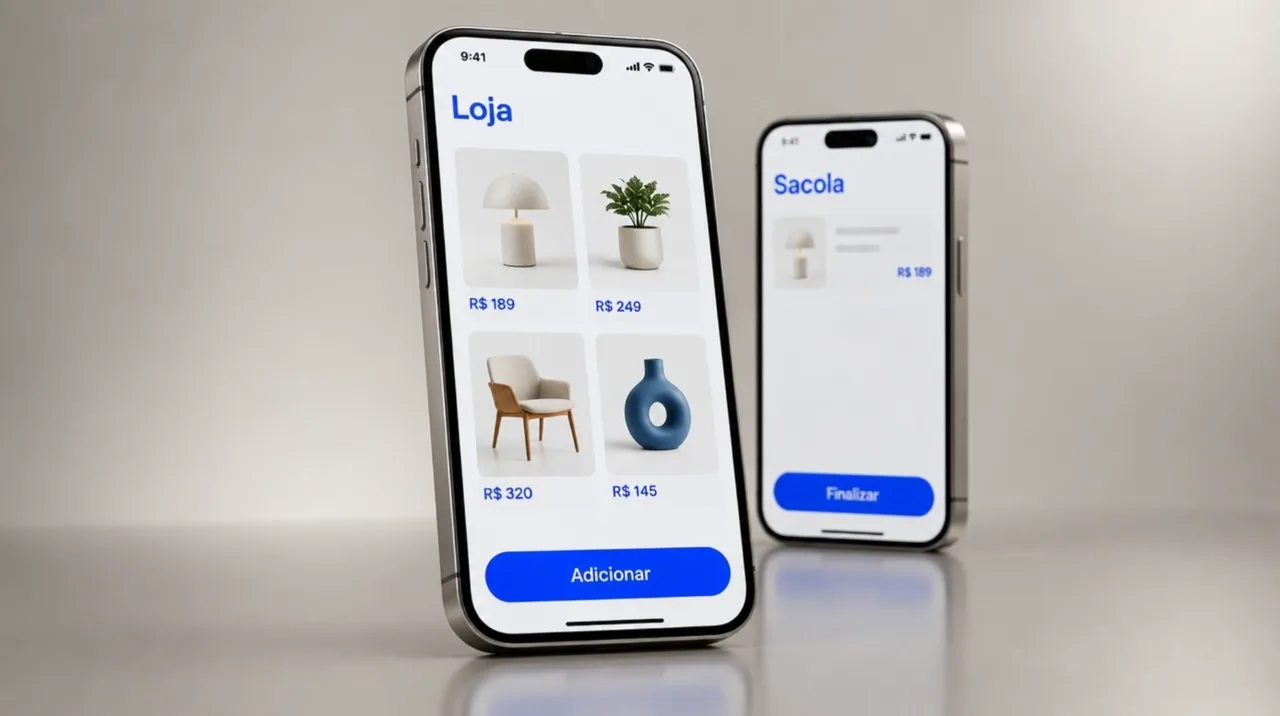
E-commerce is the technical name for the online store: catalog, cart, calculated shipping and payment by Pix and card. It is built around the products you actually sell and what happens after the purchase.
- Catalog with cart and shipping calculation
- Payment by Pix and card, through an established platform
- The store and the orders in your company’s accounts
The problem
Every order still goes through someone’s hands
Almost every business starts selling remotely over WhatsApp. The client asks the price, someone replies, sends the Pix key, checks the receipt and writes down the address. With a few orders a day, that is customer service. With many, it is a whole person tied up with something a system would do on its own.
The off-the-shelf store solves part of this and charges for it, usually a monthly fee plus a share of each sale. For many businesses the numbers add up, and we say so when that is the case. They stop adding up when the product has rules of its own: a variation that changes the price, made-to-order assembly or shipping that depends on volume. Everything that does not fit the platform goes back to WhatsApp and the spreadsheet.
What you get
A store that handles the order from start to finish
- Catalog built for your products
- Categories, search, size or color variations and the price rules your product actually has. No forcing the product into a template designed for another kind of store.
- Cart and shipping calculated before the decision
- The client sees the shipping cost based on the address and the real weight before choosing to pay. Shipping that only shows up on the last screen is one of the most common causes of abandoned carts.
- Payment by Pix and card
- The charge goes through an established payment platform, and the confirmation reaches the store on its own. Nobody has to check a receipt by hand or release an order by eye.
- What happens after the purchase
- Confirmation for the client, shipping notice with a tracking code and the dashboard where your team follows the orders. This is the stage where most complaints begin.
- Products prepared for search
- Each product gets a title and description written for the people searching for it, in the form Google expects to find on a product page.
- The store and the orders are yours
- The store runs on accounts of your company, and the list of clients and orders is yours. Changing supplier does not force you to start over from scratch.
How it works
From the first contact to the project live
-
No cost
Conversation about what you sell
Which products go into the store and how shipping works today. No commitment and no scheduled meeting.
-
In writing
Fixed-price proposal
Scope, timeline and price defined from the size of the catalog and the rules of your products.
-
You approve
Catalog and design
You approve the look of the store and the way the product is presented before the build starts.
-
With support
Test purchase and training
Before opening, we make a real purchase from end to end, with payment and shipping, and train the team.
Work in this service
SweetKoala
Digital gift: the giver builds a page with photos, music and a counter, pays, and receives a unique link with a QR code for printing.
Client. Online sales with payment on the site itself, and not a product store.
Is it right for you?
When this service makes sense and when it does not
Makes sense if
- You already sell on WhatsApp and the volume has passed what the team can handle by hand
- Your product has variations, assembly or price rules that an off-the-shelf platform does not accept
- You want to get paid by Pix and card without depending on someone checking receipts
- The monthly fee plus the commission of your current platform no longer makes sense
- You also sell over the counter and need the stock not to contradict itself between the two
Does not make sense if
- You want a site where several sellers list their own products: that is a custom system, delivered on demand, and the case goes into the first conversation
- You sell few products, with simple rules: an off-the-shelf platform costs less and does the job, and we will tell you so in the first conversation
- You need a store app to download from the App Store or Play Store: we do not build that kind of app, and we point you to someone who does
- You expect the store to bring in buyers on its own: it is search or ads that bring people there
Frequently asked questions
What people ask before hiring
Are e-commerce and an online store the same thing?
Yes. “E-commerce” is the technical name, and “online store” is what most people call it. Both mean the same thing: a website where the client chooses the product, calculates shipping and pays, without having to talk to anyone.
How much does an e-commerce store cost?
It depends on the size of the catalog and the rules your product has. Tell us on WhatsApp what you sell and get the fixed price in writing, item by item.
Off-the-shelf platform or custom store?
It depends on the case, and the honest answer is sometimes the off-the-shelf platform. A custom store pays off when the sales process has rules of its own, or when the commission on each sale already weighs more than the whole project.
Who charges what after the store opens?
Whoever processes the payment charges a share of each sale, and that charge comes from the payment provider, not from us. The percentage goes into the proposal so you can do the math before deciding. We do not charge a monthly fee, and the fixed cost that remains is the website address, paid once a year.
How long does it take for the store to be ready?
The timeline comes with the proposal, because it depends on the size of the catalog and on who will prepare the photo and description of each product. That part is usually the slowest.
Does the store connect to the stock control I already use?
When your current system allows a connection, yes, and the store starts looking at the same number as the counter. When it does not, we evaluate whether it pays to replace the system or keep the two separate. We do not promise a connection to a system before looking at it.
Can you also sell on social media?
Yes. The store can feed the catalog on social networks, so that the advertised product leads straight to its page. That connection is set up on accounts of yours.
The other services
Describe your case and get a fixed price
Tell us in one message what you need. The reply says whether it can be done, how much it costs and how long it takes, with no meeting and no commitment.
Request a quote